Showing posts with label Woodland Plants. Show all posts

Tuesday, April 30, 2013

Swift River Farm


For the past twenty years or so, Bruce Lockhart and his partner Gus Block have tirelessly worked to create a little slice of paradise at Swift River Farm. At times, they have hired garden designer Gordon Hayward for big projects, but they have done a great deal of the work themselves along with their fearless gardener and caretaker Beverly.  I deeply admire the work they have all done. The greatest thing about the garden is that it actually has everything- all parts of gardening that I love are flourishing. Bruce has built an impressive rock garden- chock full of hundreds of alpine, rocky treasures, a full-field meadow garden in the spirit of Piet Oudolf, plus formal English style gardens, a wandering woodland garden, and an orchard, bees, sheep and a vegetable garden! Even with all these different ideas, the place flows beautifully with the landscape, each area sliding into the next. They truly have it all.

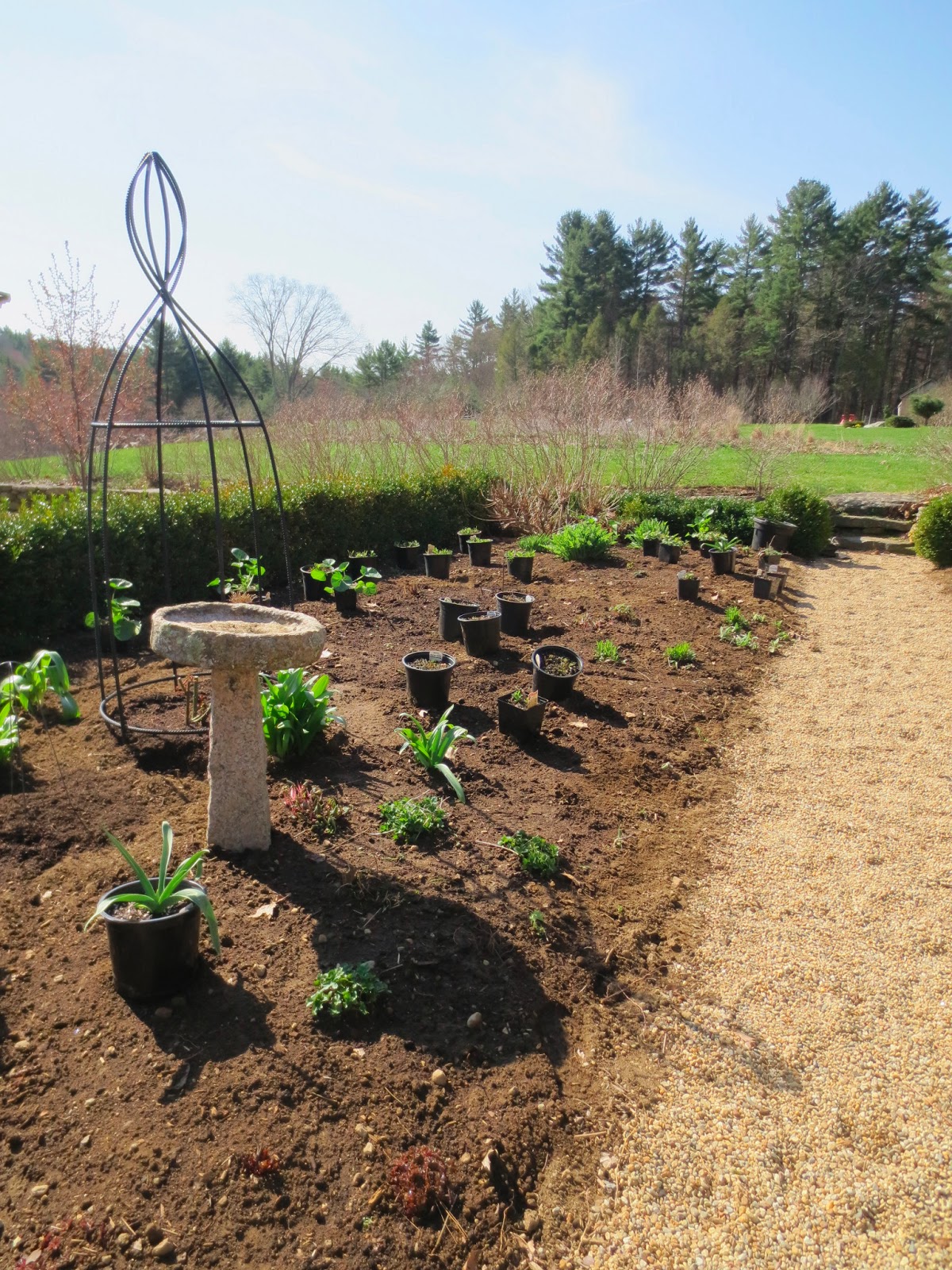
In June, the garden will be on a garden tour to raise money for the East Quabbin Land Trust. The garden tour is scheduled for June 15th (rain date June 16th) from 10-4.  For more information, click here. In order to get ready for the tour, I was hired in to do some garden renovation in the more formal "English" style gardens near the house. Initially planted in the late 90's and early 2000's, it had been some time since they had been dug up, turned over, soil amended and re-planted. So that is what I (with the help of Bruce, Beverly, Matt and Laurie) did! We dug up all the old plants, placed them on tarps, excavated rocks and bolders, pulled out quack grass and vetch, dug and turned over the beds twice, mixing in beautiful, black composted goat manure. I ordered plants from Van Berkum Nursery, then taking the new and the old plant material, we reconfigured the layout. In the Pleasure Garden (pictured above), we kept to a theme of old fashioned classics, like Verbascums, Alcea, Campanula, but added some meadow-y twists- including the towering Helianthus salicifolius and Sanguisorba 'Tanna.' Next, we will thread annuals through the gardens. Unconsciously, but I think happily, I turned one of the gardens into a red and yellow garden. Most people scrunch their noses, trying to be  polite, but you just wait- it is (hopefully!) going to be gorgeous.


After everything was planted and watered in the Pleasure Garden...


This area, above the Willow garden was an annual/holding bed. Bruce suggested making a bed of beautiful grass. We dug this up and planted  Eragrostis spectabilis, Purple Love grass. I was trying to mimic the plantings of pink Mulenbergia that I have seen at the Denver Botanic Garden and at Chanticleer, but this grass is not hardy in MA. Then I came across the Purple Love Grass- which happens to be a Piet Uduolf favorite and one that they grow and sell at Great Dixter. So we can't go wrong here!


Across the way, under the upright Yews, is a mass planting of Amsonia hubrictii that Gordon Hayward designed. These areas of mass plantings offer a nice break and resting point, in between the packed in perennial borders.  


Looking up The Willow Garden to the house. This area was also dug up and turned over. The Willow Garden is also a blue garden so we stuck to the theme of purple, blue and silvery plants. Bruce wanted to move a row of boxwoods from an area of the garden and wondered where to put them. I suggested we move four of them to the interior of this garden to frame the bird bath. 


We did that, and then planted new and old plants into the freshly turned soil.


 A view from the Pleasure garden, down to the Willow garden.


Around the pond we planted Panicum 'Heavy Metal' on both sides. We needed to transplant the bright pink Lychnis coronaria that Bruce started from seed from the holding bed to somewhere... I thought the clouds of magenta would looks exciting with the steely blue grass. I tried to plant it to look self-seedy.


And now, Bruce's woodland garden.


Magnolia kobus 'Wada's Memory' with its sweet smell of vanilla.


Dangling yellow clusters of Corylopsis, which I did not know could survive our climate!


Bruce is part of a seed exchange, so he grew this little Primula frondosa from seed.


This is by far the best stand of Jeffersonia dubia I have ever seen, glorious and happy in the rock garden. There are countless treasures here and I hope to post more on Bruce's garden as the seasons change.

Sunday, March 3, 2013

Wollerton Old Hall


March has arrived; and with it more snow.  Today, the sky is white with it, but I am dreaming of spring. The past two years I have spent the month of March gardening in England, and thoughts of the of the long and luxurious English spring are at the forefront of my mind. Over there, spring creeps along, each day a smidgeon more of the season arrives, buds form and then wait days and sometimes weeks to open. It is not like Vermont, where spring happens quickly and then it is summer. Even in the March snow flurries, there are lurking hints of the coming change- longer days and shifting light, animals everywhere jaunty with spring fever, and icy buds on trees and shrubs turning rosy and plump.

Last week I gave my first lectures at the Connecticut Flower and Garden show, one on spring gardening maintenance and the other on annual plant design. While I poured over all my photographs in preparation, I came across some lovely shots of Wollerton Old Hall, taken last April. These pictures had me jumpy for spring and I realized I never wrote a post about this wonderful place.

Wollerton Old Hall is a private garden designed by its owners, John and Lesley Jenkins, and it is a garden that feels like a fairy tale. There are interconnecting garden rooms, each with its own feeling and flavor, all immaculately designed and bursting over with incredible plant material. I approached different parts of the garden from various openings, surprised each time by the change in perspective.


Phormium leaves against a backdrop of hot colored tulips.


I cannot get over this combination- the deep purple-red of the tulip brings out the stunning burgundy in the Euphorbia.


They had a rich collection of Erythroniums, from pink, to yellow to white. There were no plant tags in this garden, which made the place even more enticing.


More Erythroniums with a white Corydalis (possibly C. ochroleuca?). This section housed an incredible tapestry of woodland plants.


A packed in arrangement of spring loveliness. Even the yellow flowered, weedy celandine (Ranunculus ficaria) looks perfect.


 Here is what I believe to be a variegated Cordyline looking lovely with fat berries of a variegated ivy.


Some pretty Prunus dropping its petals like snowflakes. Its bright white and dangling branches are strikingly good against those deep green, angular yews.


An immediate love-at-first-sight plant- Lamium orvala. This lonely bee was feasting on this plant in April.


The flower close up!


A sea of bleeding hearts made even more beautiful by perfectly perched rain drops.


Under a dramatic spring sky.


A double bloodroot- Sanguinaria canadensis 'Mulitplex'

Wednesday, May 2, 2012

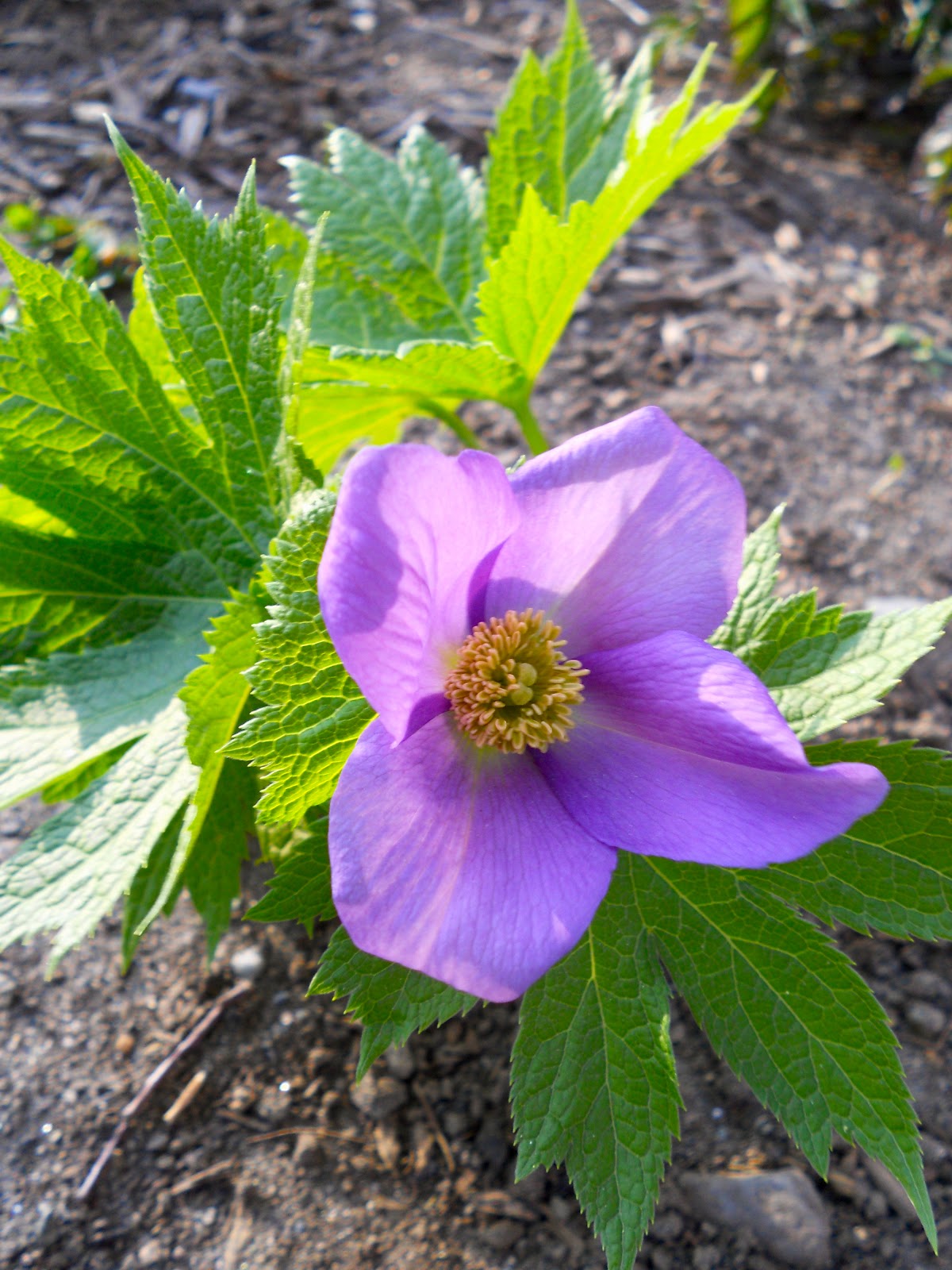
Glaucidium palmatum


Glaucidium palmatum, a monotypic genus from northern and eastern Japan; it is, of course, in the Rannunculaceae family (all my favorites are!) This tiny woodland gem came to my garden as one sprout and one leaf. After two or three years it has survived (not prospered) through the cold winters, warm summers, periods of drought and flood, and this spring it put up its first bloom. And what a bloom it is. This solitary flower has been showing off for over a week, through heavy rains and heavy frosts.

I recently wrote a short piece for the Garden Diary on the Great Dixter website. You can see it here.

Sunday, April 1, 2012

The Orchard Meadow


The Orchard Meadow is the most stunning meadow planting at Dixter. It is larger than the Topiary and front entrance meadows, but I think that its rolling downward slope that gradually gives way to the surrounding fields is what makes it so beautiful. Also it is packed to the brim with numerous Narcissus and these days they are at their peak performance. This is the place to sit at the end of the day and take it all in.  


Corylopsis spicata flowering in time with the daffodils. Reminds me of a similar combination at Gravetye Manor with the yellow azalea backed by a field of yellow daffodils. 


You can really see the shapes and sweeps of plantings


Looking up at the Long Border. The Primula 'Crescendo Bright Red' and the bronze red of the spirea really help set off the yellow.

Saturday, March 31, 2012

Sissinghurst at Sunset


On Thursday evening after work, seven of us from Great Dixter all went over to Sissinghurst to see the garden in all its springtime splendor. It was great to be there when the garden was closed to the public and to stroll the paths in the fading afternoon light. The head gardener, Alexis Datta, unlocked the gate and left us to roam freely through the garden. It was incredible!


A walk through the Nuttery


The Cottage Garden


Stachyurus chinensis 'Celina' in bloom, under planted with Erythronium toulumnense


The amazing roses, beautifully pruned into wonderful shapes and standing structures.


Ribes laurifolium, a scrambling shrub hangs behind the bright yellow cups of Scopolia podolica 'Hladnikiana'


It is hard to see, but in the background there is a magnificent white magnolia in absolute full flower. It was intensely fragrant, filling the air with scent. I had never seen such a floriferous magnolia before, blossoms up and down every single branch.


The Delos garden flush in scilla, anemones, and mauve hellebores


Sissinghurst has the most beautiful brick walls throughout the garden and they are covered with finely pruned trees, shrubs, and vines, such as this incredible Chaenomeles 'Knap Hill Scarlet.'


Clematis alpina 'Ruby'


The Moat


Looking up at the castle, across the daffodil filled orchard meadow

Wednesday, March 28, 2012

Woodland Plants


The weather has been amazing and it is kicking everything into high gear. On Sunday afternoon a group of us went down into a patch of Dixter's woods and saw mass plantings of the native Anemone nemerosa with scatterings of early bluebells (hyacinthiodes non-scripta).


A carpet of anemone in the woods


Fritillaria meleagris in a small meadow behind the topiary garden


Erythronium dens-canis in the same meadow


Scilla bithynica with Arum italicum as seen in the Barn Garden