Saturday, March 23, 2013

Wave Hill


 Friends and I visited Wave Hill last weekend and were given the grand, back door tour by three great gardeners who work or worked there for years. I first heard about Wave Hill from the great head gardener himself, Marco Polo Stefano, now retired, but who worked for 34 years creating the world renown garden- both in terms of design and plants. I have heard Marco Polo Stefano speak one other time since and what comes through in his talks is his love of plants, but more importantly, is his love of using them well, interestingly, and in combination with other plants. Even for the devout plantsman, a garden is not just a collection; it is about being creative with plant material, manipulating and combining them with other great plants.  There is a wonderful tension, a balance between, imitating and manipulating nature. Marco Polo Stefano used the term 'Hand of Man' to describe techniques in pruning and controlling plants, while simultaneously working to mimic the natural tendencies of plants to combine, intermingle, and scramble through each other.

The sculptural aspects of plants was one of Marco Polo's founding ideas- shape and texture often preceded color. His use of conifers, trees and shrubs was paramount in building a garden. I was happy to see the garden in March when the bones were most visible. Wave Hill is one of the best gardens I have ever seen in winter, especially up in the Wild Garden. In the above photo, the beautiful renovated glass house stands against an artful canopy- full of wild and unusual shapes.


The Wild Garden, the highest point in the garden, looks across the Hudson River to those glorious cliff faces of the Palisades. It was a strange sensation to be in the Bronx, but looking out to an unobstructed view of nature.


Crocus vernus 'Pickwick,' a stout and elegantly stripped, large flowering crocus.


These sumac were here when Marco Polo started gardening this site- these common scrubby plants are beautifully incorporated- pruned to show off their floppy trunks and under planted with treasures.


Iris reticulata coming out of a Carex flacca 'Blue Zinger.' The grass roots must be delicate enough to not out compete the iris.


Lace Bark Pink (Pinus bungeana)
This one was badly marred by people carving their names in the bark. This sounds dramatic, but I don't know if I ever saw such scars from weeping. The sap made long lines running down the trunk. Don't carve into trees!


We were all immediately sold on this Cotoneaster drammeri 'Coral Beauty.' It has a beautiful burgundy color to its leaves, prolific berries, and nice lateral growth.


Inside the conservatory was one of the best container displays I have ever seen.


Thunbergia mysorensis, with its lovely hanging clusters.


Friday, March 15, 2013

Volunteering at Chanticleer

 
It has been a fast and furious week volunteering at Chanticleer. Days and evenings were packed with work, garden tours, lectures, and meeting other gardeners. I have jumped into the gardening season full throttle, brimming over with new ideas, new plant knowledge, excitement and inspiration. I worked alongside Emma each day, as this was something we both hoped for- and we got a lot accomplished. She is now nearly ready to plant! Emma has been very ambitious in her first six months, digging up her gardens, amending soils and growing lots and lots of plants. I have included a highlight reel of some of the projects I helped her with this week.
Above: A picture of the gravel garden looking glorious during one of the sunny spells. Everyone who worked at Chanticleer, from the office to the seasonal gardeners, were so welcoming and wonderful. I wish I could have been there a month and worked in every section of the garden. There is a lot of individuality, creativity and autonomy among the gardeners, and yet the whole place flows so beautifully. Each section blends into the next, seamlessly, though each area offers something new.


Emma was trained at Great Dixter for a year and half so many of her methods and plant material derive from that great garden.  Like Great Dixter, Emma (and many other gardeners at Chanticleer),  is growing a great deal of her own plant material from seed, which means this time of year there is constant sowing, pricking out (moving tiny seedlings into plug trays), and potting on (moving seedlings from plug trays into 4" pots). It was happily reminiscent to work together again at these tasks we shared at Great Dixter a year ago.

Above: Sowing Orlaya grandiflora seeds, spiny sea creature looking things! In the background you can see Emma's wooden, hand made soil tamper. This is used to gently flatten the surface of the soil before sowing.


Benches in the warm and humid propagation house with seeds and seedlings at various stages.


Wee Nicotiana 'Lime Green' seedlings being pricked out...


...and carefully transplanted into plug trays. We used very skinny stakes cut to a point to make a little hole in the plug for the long, wispy roots of the seedlings. At this stage, we only handle the buggers by their leaves- counting on the fact that these leaves are readily replaced, unlike stems and roots that can be easily damaged, making the plant suffer all the more during this delicate transition.


 Cold frames, already tight with material. This time of year, all frost-free zones are highly coveted.  This is the last step before life in the real world, so being brave and kicking the kids out into the cold can be hard! The pots of spring bulbs growing on in the cold frame are almost ready to go out, which will clear up a great deal of space for young, tender plants.


In conjunction with finicky greenhouse work, we hauled, dug, moved, raked, rototilled, wheelbarrowed a great deal of soil around. Here is the after picture of the vegetable garden, which was weedy and full of old vegetables from the previous season. We turned the thing over and added 30 wheelbarrows of mushroom compost. Next, Emma will rototill again and dig and place her paths.


Just in case you thought I shoveled and filled all of those wheelbarrows... I did not. Emma would dump a load into the barrows and I would wheel them to the appropriate places. The next day we did the same treatment to the long lines of asparagus running parallel to the cutting garden.


We dug, divided, and saved-for-later the lovely Carex 'Bowles Golden,' which gave the tulips a little breathing room.


All cleaned up with a little mushroom compost added and lightly turned in.


And then we made a soil mix. Emma uses Chanticleer compost with a little decomposed bark mulch, a large bucket of grit, and a few handfuls of Osmocote, a slow release pellet fertilizer. She hand mixes the ingredients first by trowing it into a pile (two times). Then she runs the rototiller over the mix multiple passes. Lastly, she screens it; creating a fine, loamy, nutritious mix. She uses this soil to transplant her seedlings from plug trays into 4" pots. The plants at this state don't need a sterilized mix and will benefit from becoming acclimated to the garden soils in which they will eventually land.


Dramatic light on the Sporobolus heterolepsis planting.


Iris reticulata

This is an incredible garden and I am honored to have spent a week here. Thank you to everyone at Chanticleer for making my visit so spectacular!

Tuesday, March 12, 2013

Bulb Show: Smith College Conservatory


Here is a quick look at the bulb show at Smith College Conservatory. This is a great place to get really excited about spring. Fragrance, moisture, warm air, color, flowers, green growth offer a feast for the senses. (I love how they matched the colors of these bulbs with the curtains!)


Splashes of pink Loropetalum, nodding checkered bells of Fritillaria meleagris, and bright orange globes of citrus


Red to yellow Lachenalia aliodes with deep blue Muscari


Sweet Ipheion uniflorum with the coppery sculpture mimicking its form


Freesia- this is my favorite fragrance on earth


I love this hot colored craziness!

This week I am volunteering at Chanticleer. It is definitely spring here- snowdrops, crocus, witch hazels, cyclamen, eranthis are popping out of the ground everywhere. Stay tuned for posts about the exciting spring work and the nearby garden visits...

Sunday, March 3, 2013

Wollerton Old Hall


March has arrived; and with it more snow.  Today, the sky is white with it, but I am dreaming of spring. The past two years I have spent the month of March gardening in England, and thoughts of the of the long and luxurious English spring are at the forefront of my mind. Over there, spring creeps along, each day a smidgeon more of the season arrives, buds form and then wait days and sometimes weeks to open. It is not like Vermont, where spring happens quickly and then it is summer. Even in the March snow flurries, there are lurking hints of the coming change- longer days and shifting light, animals everywhere jaunty with spring fever, and icy buds on trees and shrubs turning rosy and plump.

Last week I gave my first lectures at the Connecticut Flower and Garden show, one on spring gardening maintenance and the other on annual plant design. While I poured over all my photographs in preparation, I came across some lovely shots of Wollerton Old Hall, taken last April. These pictures had me jumpy for spring and I realized I never wrote a post about this wonderful place.

Wollerton Old Hall is a private garden designed by its owners, John and Lesley Jenkins, and it is a garden that feels like a fairy tale. There are interconnecting garden rooms, each with its own feeling and flavor, all immaculately designed and bursting over with incredible plant material. I approached different parts of the garden from various openings, surprised each time by the change in perspective.


Phormium leaves against a backdrop of hot colored tulips.


I cannot get over this combination- the deep purple-red of the tulip brings out the stunning burgundy in the Euphorbia.


They had a rich collection of Erythroniums, from pink, to yellow to white. There were no plant tags in this garden, which made the place even more enticing.


More Erythroniums with a white Corydalis (possibly C. ochroleuca?). This section housed an incredible tapestry of woodland plants.


A packed in arrangement of spring loveliness. Even the yellow flowered, weedy celandine (Ranunculus ficaria) looks perfect.


 Here is what I believe to be a variegated Cordyline looking lovely with fat berries of a variegated ivy.


Some pretty Prunus dropping its petals like snowflakes. Its bright white and dangling branches are strikingly good against those deep green, angular yews.


An immediate love-at-first-sight plant- Lamium orvala. This lonely bee was feasting on this plant in April.


The flower close up!


A sea of bleeding hearts made even more beautiful by perfectly perched rain drops.


Under a dramatic spring sky.


A double bloodroot- Sanguinaria canadensis 'Mulitplex'

Saturday, January 26, 2013

Dungeness


 In December, a friend Mark Moisinski wrote a blog post on the quiet, unbelievably beautiful and uncanny place called Dungeness in Kent, England. It made me think of my visit last year with my friends from Great Dixter and I searched around for my photos. It was Emma's birthday trip, a strikingly beautiful Sunday in March, and she wanted to go to Dungeness and sit by the sea and visit the late Derek Jarman's garden at Prospect Cottage. I was eager to go as I had first heard about this place from a talk by Marco Polo Stefano the summer before. He showed slides (actual slides) of a garden, by the sea, but it looked like a desert, surrounded by sand, rocks, bright sun, and the infamous nuclear power plant. The images of sculptures, succulents, rocks and flowers against the backdrop of a blue, blue sky and distant towers were memorable, and I always hoped to visit one day.

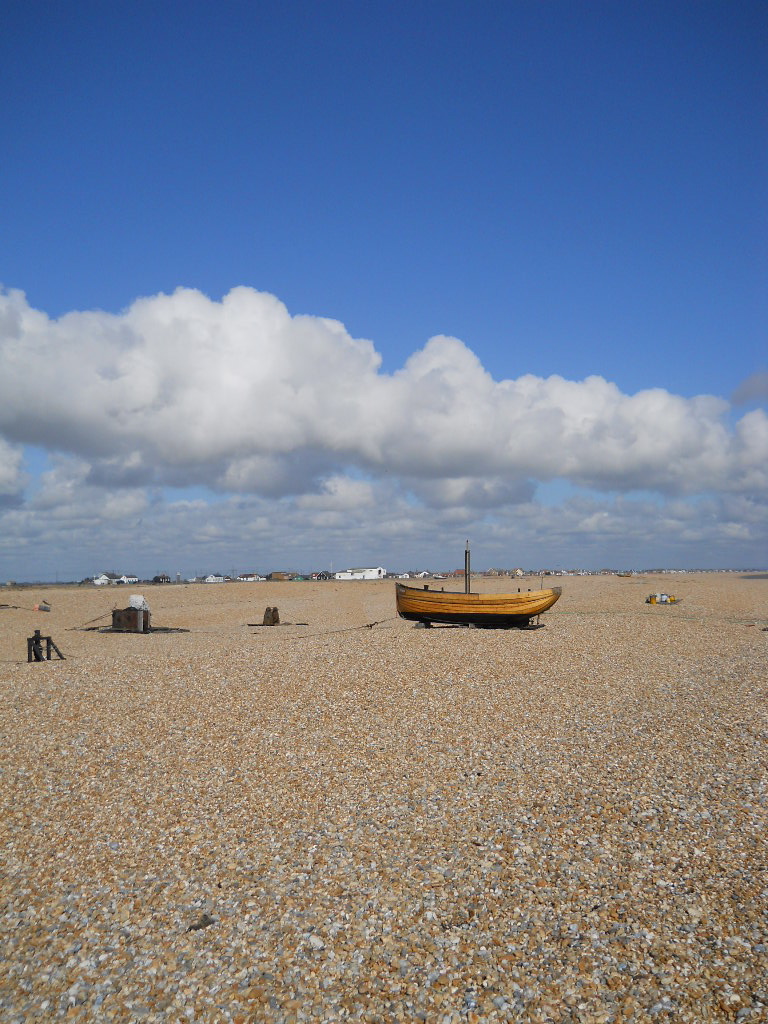
Of course being there was better than the slide show. There is a very peculiar feeling about the place and it is unlike anywhere else I have ever been before. It is a little eerie, quiet, timeless, and so peaceful. The beach is long and very wide, with rolling, rocky dune-like hills and all along the way there are remnants of a fishing industry with amazing weedy, tough and miraculous plants growing in salty rocks. There are abandoned boats, odd pieces of metal and long lines of nets scattered along the coast.


The colors of the day were so vibrant- mostly of blues and yellows.


A glimpse of the rolling surf. The day was unseasonably warm and we all did go swimming- well, most of us anyway.


Emma Seniuk and Rachael Dodd standing outside Derek Jarman's garden. I love the crazy verticals in this shot. Rachael was just interviewed in this month's Garden's Illustrated as the first in a series showcasing the brightest new gardening talent!


The colors of the day were just spectacular- the yellow of the beach, to the flowers, to the tip of the rock sculpture- all against cerulean skies.


Evidence of work with a wheelbarrow and sod dug and new gardens turned over. You can see the power plant towers in the background.


The living and non-living were equally a part of the garden. The rocks, the structures, the sculptures, the beach, and the nuclear power plant were all valuable pieces- it was a garden that brought all of its surroundings into it (including us). It was more than a reflection, more like an extenuation, of this magical and mysterious place called Dungeness.


There were no borders keeping something in or out, nothing to separate- the landscape, garden, sculptures and towers were all continuations of each other.